
TIRANA MEDICAL GUIDE
All-on-4 vs All-on-6: which one makes sense for you?
The difference is not just the number. Four implants can be a sufficiently valid solution; six, when they can be placed well, provide two extra supports. The key is understanding when that extra support is useful and what can be done if bone is limited.
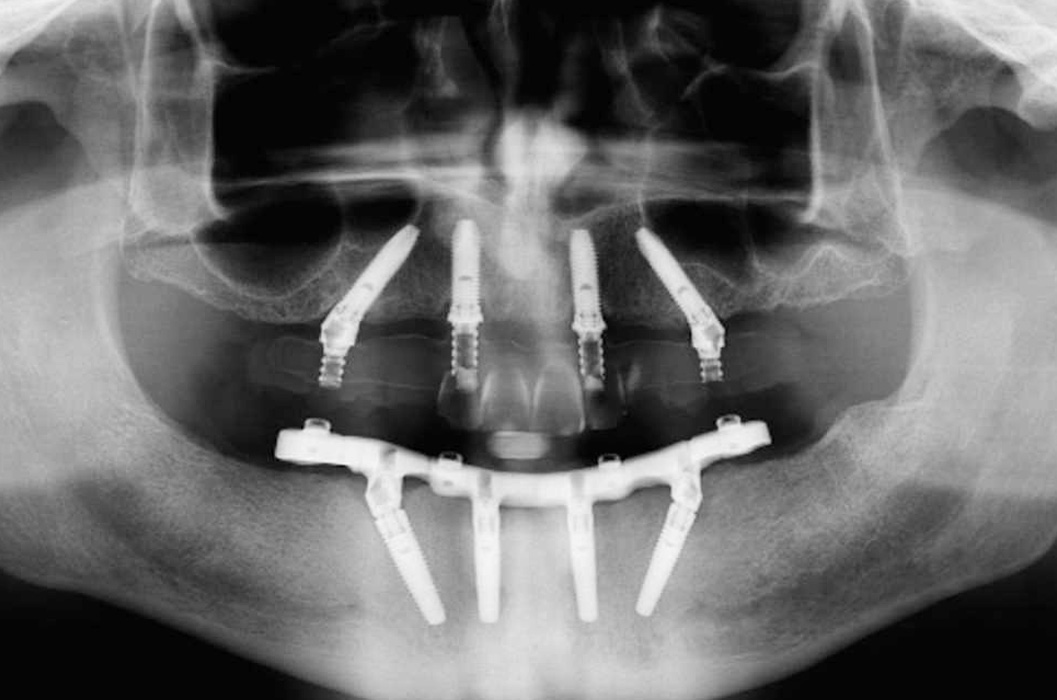
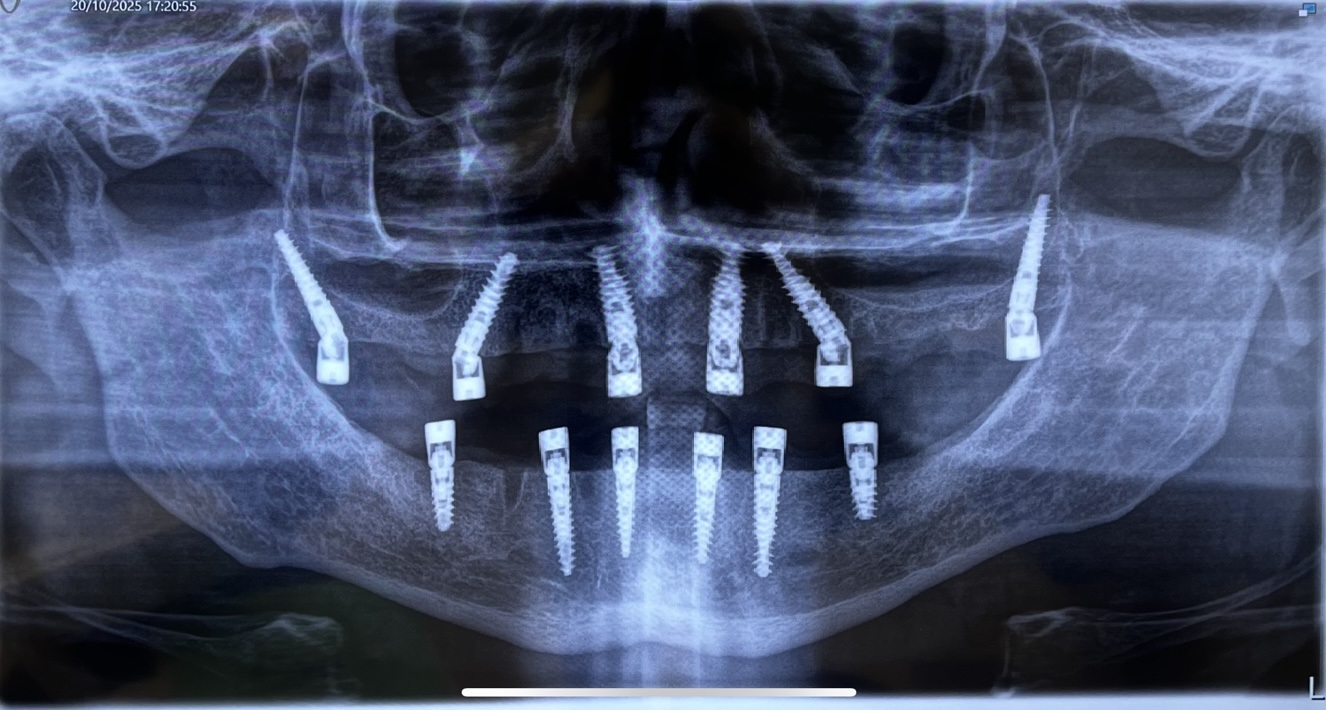
The simple difference: 4 supports or 6
All-on-4 uses four implants to support a full fixed arch. All-on-6 uses six.
Four can work very well when they are stable and well distributed. Six add two more support points, but only if there is enough bone to place them in useful positions.
Why six implants distribute the load across more supports
With the same treatment quality, six implants spread chewing forces across more supports. Each implant carries a smaller share of the load and there is more redundancy if one implant develops a problem later.
This is a biomechanical advantage. It does not mean that a well-planned All-on-4 is a poor treatment.
When four implants make sense
Four may be chosen when bone or anatomy does not allow six implants to be placed in good positions, or when the prosthetic plan has been designed correctly around four supports.
Ask: “Why four in my case? Could six be used, or would that require additional procedures?”
If you want six but bone is limited
Limited bone does not automatically mean you must stop at four. Depending on the area, options may include bone grafting, sinus lift, pterygoid implants or, in severe upper-jaw atrophy, zygomatic implants.
A CBCT scan is used to see which option is actually possible and whether the extra procedure is justified.
The number only helps if the implants are well distributed
Six implants in poor positions are not automatically better than four well distributed implants. Bone volume, spacing, angulation, posterior support and the prosthesis all matter.
A useful quote should explain where the implants will go and why, not only the number.
Four can be sufficiently valid; six provide more support when bone allows it
With six implants, chewing load is distributed across more points and more supports remain if one develops a problem. All else being equal, this creates a more stable base and more safety over time. Good placement still requires enough bone in the right areas; if bone is limited, grafting, sinus lift or alternative anchorage may be considered depending on the case.
Compare these 5 things as well
Bone
Are there enough useful sites for the implants?
Distribution
Do the implants support the whole arch well?
Surgeon
Can the team manage grafts or advanced implants if needed?
Final prosthesis
Material, fit, bite and cleanability.
Aftercare
Controls, maintenance and management of complications.
The question that needs a clear answer
If two clinics propose different numbers, ask: “Why 4 or 6 in my case? Where would you place them? If bone is limited, which alternatives did you consider?”
A clear answer tied to your scan is more useful than any slogan.
So: 4 or 6 implants?
If both options are genuinely possible and the work is of the same standard, 6 implants provide more support points and more reserve. Four can still be sufficiently valid when six cannot be placed well or would require procedures that are not justified. If bone is the only limitation and you want to assess six supports, the next question is which solutions could create or find additional anchorage.
BEFORE YOU DECIDE
Are you considering 4 or 6 implants?
You can request an assessment even if you do not yet have scans or quotes. If you are starting from zero, we tell you which information is useful to begin with. If you already have a CT scan, panoramic X-ray or quotes, we can compare implant number and position, available bone, any additional procedures and the planned prosthesis.
Request an assessment →General information only: it does not replace diagnosis, examination or advice from a qualified healthcare professional.
Explore Tirana Medical guides
Choose the area you are interested in and continue from there.